The History of St Joseph’s College

St. Joseph’s College was founded as a boarding school for boys in 1875, by the Marist Brothers, a Roman Catholic Teaching Order, which originated in France. Under the direction of the first Principal, Brother Alphonsus, the school opened with twelve pupils.

The College was originally housed in what had been the Dumfries Infirmary, opened in 1778, in the Dock Park, where the modern flats now stand in Grant Court. It was purchased on behalf of the Marist Brothers in 1874 by a Mr. Murphy of Dumfries, after the Infirmary moved to its new quarters, across the road at Nithbank. It was to be used for the training of young men for the Marist Brotherhood, and owing to the demand for boarding school education they accepted the first boarders on 5th January, 1875.

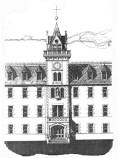
The accommodation was soon found to be too small for the demands which were made on it, and so the Brothers purchased the property known as Laurel Mount on the Craigs Road in 1877, built a new training school for young Brothers and renamed it Mount St. Michael. St. Joseph’s College continued in the old Infirmary until further need for expansion caused the Brothers to build the present main building in 1909.

In the 1920s the extensive playing fields at Maryfield were purchased, and in 1925 the College Chapel was dedicated to the memory of those former pupils who had died in the First World War. The old gymnasium known as the Brother John Joseph Memorial Hall, was opened in 1934, and in 1960, the Assembly Hall block was opened.

In 1971, the Marist Brothers and the Dumfriesshire Education Authority made an arrangement whereby all Roman Catholic boys of secondary school age living in Dumfriesshire, could attend the College, and by 1975, the Centenary Year, the role had risen to almost 600. Around that time, further negotiations were initiated between the Marist Brothers and Dumfries and Galloway Regional Council, with a view to the College becoming a Roman Catholic Comprehensive School for girls and boys. Thereafter a policy of phasing out the boarding population began.

In 1981, the College was taken over formally by Dumfries and Galloway Regional Council, to become one of the four six year co-educational comprehensive schools within the Burgh of Dumfries. It was to have a special regard for the educational needs of the Roman Catholic population, from the catchment areas of Dumfries, Annan, Castle Douglas and Dalbeattie, but places at St. Joseph’s College are also available to children of secondary school age of other denominations whose parents wish to send them to the College. This is very much in keeping with the tradition established by the Marist Brothers.

The Regional Authority drew up a major rebuilding programme, which involved expenditure of a sum in excess of £4 million over the years 1982 – 1987. Once this was underway, the first lay Headmaster commenced in 1982 after which girls were accommodated from the Benedictine Convent School and St. Andrews Secondary School.

Many of its past pupils have made significant contributions to the Church, the professions and to public life in general, which has enhanced the name of the College within the British Isles and beyond. These are traditions which all staff, parents and pupils should strive to maintain and develop within the framework of the changed circumstances.
St Marcellin Champagnat

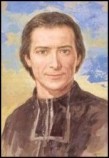
St Marcellin Champagnat, the Founder of the Marist Brothers, was born in the district of Marlhes, France, in 1789. He died fifty-one years later, in 1840, at a place called Our Lady of the Hermitage in the valley of the Gier River, only about 30 kilometres from Marlhes. His whole life was spent in this small region. By studying his spirit we can learn much about the traditions and spirit of St. Joseph’s College.

His life was simple and unspectacular. The region in which he lived and worked was run-down, materially poor, educationally ignorant, and morally at a low ebb, for the French Revolution and Napoleonic Wars had taken toll of such districts in France. Some civic and church authorities as well as fellow priests bitterly opposed Fr. Champagnat’s attempts to found an Order of Brothers who could help alleviate this misery both locally and overseas.

But when he died in 1840, more than 320 young men had already chosen to follow his way of life and work. Within twenty years this number expanded to well over 2000, so that today there are some 6000 Brothers teaching over 500,000 students throughout the world.

1. Simplicity

Champagnat was an uncomplicated person who worked hard, lived simply and loved the little people of his world. With his spirit we have no need to boast, no matter what our talents or achievements are.

2. Deep Concern

He was a man of great compassion for youth, the rural poor, delinquents, orphans, the sick and disadvantaged. We too can show compassion in our classrooms and community.

3. Open-mindedness

We can be people of understanding towards those disadvantaged through colour, race, poverty, addictions, handicap or illness.

4. Trust in God and Mary

Marcellin had deep trust in God and devotion to Mary. This confidence removes fear and gives calm in times of difficulty.

5. Strength of Character

Despite opposition and ill-health, Champagnat never gave up. We too can persevere, work hard and strive forward without resentment.

6. Family Spirit

He created warmth in community life. A Marist school should feel like family — accepting, supportive and united for the common good.

7. Practical Wisdom

Champagnat understood his times and adapted wisely. We too should act with sound judgement, honesty and hard work.

In summary, we fit into the traditions of the College when we work hard, think of others, show common sense, trust in God, avoid boasting and never give up.
— Written by James Gray

The College Crest & Motto

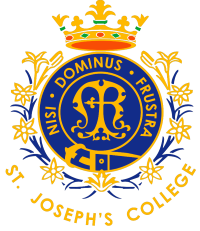
The College Crest is gold on a royal blue background. Not unnaturally it symbolises the Marist foundation of the College. The ‘M’ in the centre represents Mary, the Mother of Jesus, and the Crown is her crown as Queen of Heaven. The whole crest represents the Marist Brother’s devotion to Mary, and indicates the origin of their name, as the ‘Little Brothers of Mary’.

“Nisi Dominus Frustra”
The College Motto comes from the second verse of the 126th Psalm, where David says: “Unless the Lord guard the city, the guards watch in vain.” In Latin this reads: “Nisi Dominus custodiunt cogitate frustra vigilant qui custodiunt eam.” The three key words taken together mean: “Without the Lord all is in vain.”
This motto is shared with Edinburgh, the capital city, and with the King’s Own Scottish Borderers Regiment.